Commercial Water Restoration in Eagle Trace, IN
Fire sprinkler discharge, riser failures and roof drain backups in Eagle Trace get a crew dispatched within 2 hours.
Eagle Trace Water Restoration provides Commercial Water Restoration in Eagle Trace, IN. 24/7 emergency response with IICRC certified crews, and we work with your insurance carrier on approved claims. Call (463) 223-3831 for immediate dispatch.
- Service: Commercial Water Restoration for Eagle Trace homeowners
- Service area: Eagle Trace, IN and surrounding areas
- Response time: Around the clock dispatch; Eagle Trace emergencies move to the front of the line
- Licensed and insured (License #RC21100059)
- Serving Eagle Trace, IN since 2018
Commercial Water Damage Restoration in Eagle Trace
We extract water and dry commercial buildings across Eagle Trace, and we're available around the clock.
Site Conditions
Slow draining clay soil can keep water against foundations and lower levels after a storm. Freeze and thaw cycles each winter can burst pipes in unheated parts of a commercial building. Your building's own drains and roof get checked on the first walkthrough with whoever manages the property.
We cover commercial properties across Eagle Trace, including the area around the Greenwood City Center and Greenwood Park Mall. We also handle commercial water losses in Beech Grove, Southport, New Whiteland and Bargersville.
Commercial Water Restoration for Eagle Trace Businesses
Half of the open plan is dry and half is wet, and your people still need desks on Monday. Ceiling panels over the affected bays come down for drying while the rest of the office keeps working, and carpet tile can come up in sections. Eagle Trace Water Restoration plans the drying in your Eagle Trace office around who sits where.
Eagle Trace Water Restoration documents a commercial water loss in Eagle Trace by suite and by common area from the first walkthrough. Photos, moisture readings and the scope get split the way a lease and a building file need them. Ownership, tenants and your carrier can all read the same record, and you decide who gets which part of it.
Monitoring runs daily while equipment is on the floor. The same locations get read with the same meters, logged against unaffected baseline readings taken elsewhere in your building, and equipment gets repositioned as the wet zones shrink. Equipment hours get recorded too, since the equipment days show up on the invoice. Your management office gets the day's numbers, so you always know what's left to dry.
When the water came from another suite or from a vendor's work, the origin shapes how responsibility gets sorted out. Photograph the source and note who was working in the space above. Leave the failed fitting in place so the crew can document it. Eagle Trace Water Restoration records the path of the water from that source to your Eagle Trace space.
When the same ceiling stains after every hard rain, the file from the last loss saves time on the next one. Eagle Trace Water Restoration hands Eagle Trace property managers the readings and photographs in one package, so a repeat call about the same riser or drain starts from what was found before.
Signs You Need Commercial Water Restoration
If you notice any of these in your Eagle Trace building, schedule a free inspection before the issue worsens.
Patches of a concrete slab staying dark for hours after everything around them dried
Space humidity climbing on the building management system with no thermostat change
Water heater tank leaking onto a utility room floor and running under the door
Baseboards swelling at the bottom of a wall in an office suite
Rust staining at the base of steel studs, shelving uprights or racking posts
Water pooling at the base of an interior column or along a demountable partition track
Carpet in the sanctuary or fellowship hall squishing underfoot after a weekend storm
Brown stains forming on ceiling tiles beneath a roof drain location after a storm
Standing water in the lift pit, or a pit alarm showing on the monitoring panel
Water running down stairwell treads or collecting on a landing below an upper floor
How Eagle Trace Water Restoration Handles Commercial Water Restoration
We follow these steps in order on every Eagle Trace job.
Emergency Call Intake
The person who answers asks where the water is coming from in your Eagle Trace building and whether the source is shut off. Access details and your engineer's contact get collected, and you hear what to move and what to leave in place for photographs.
Containment and Zone Planning
Affected areas get polyed off and put under negative pressure where the water category calls for it, with corridors and egress kept clear. Zone boundaries get drawn with your management office so unaffected tenants keep working.
Structural Drying Design
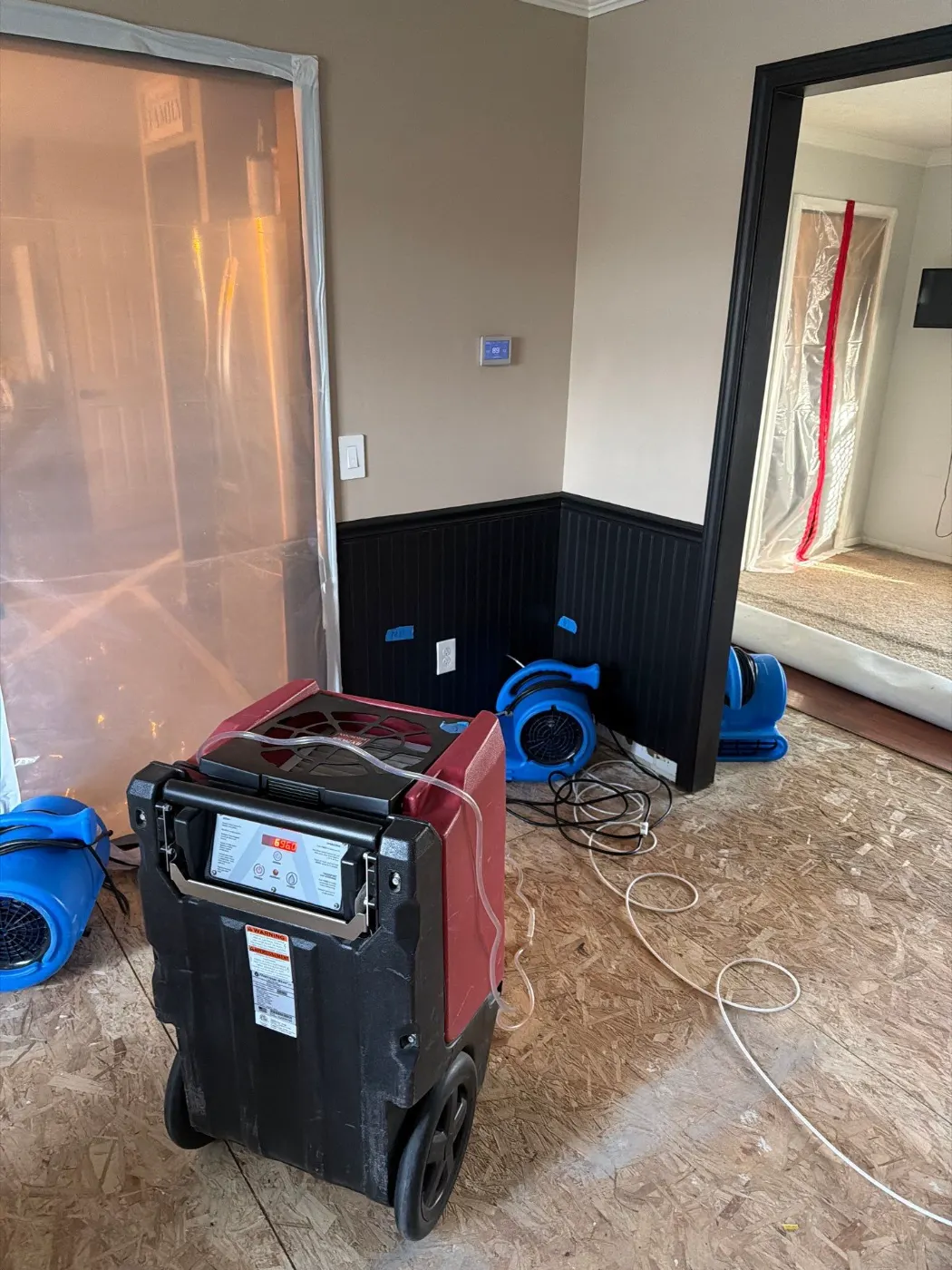
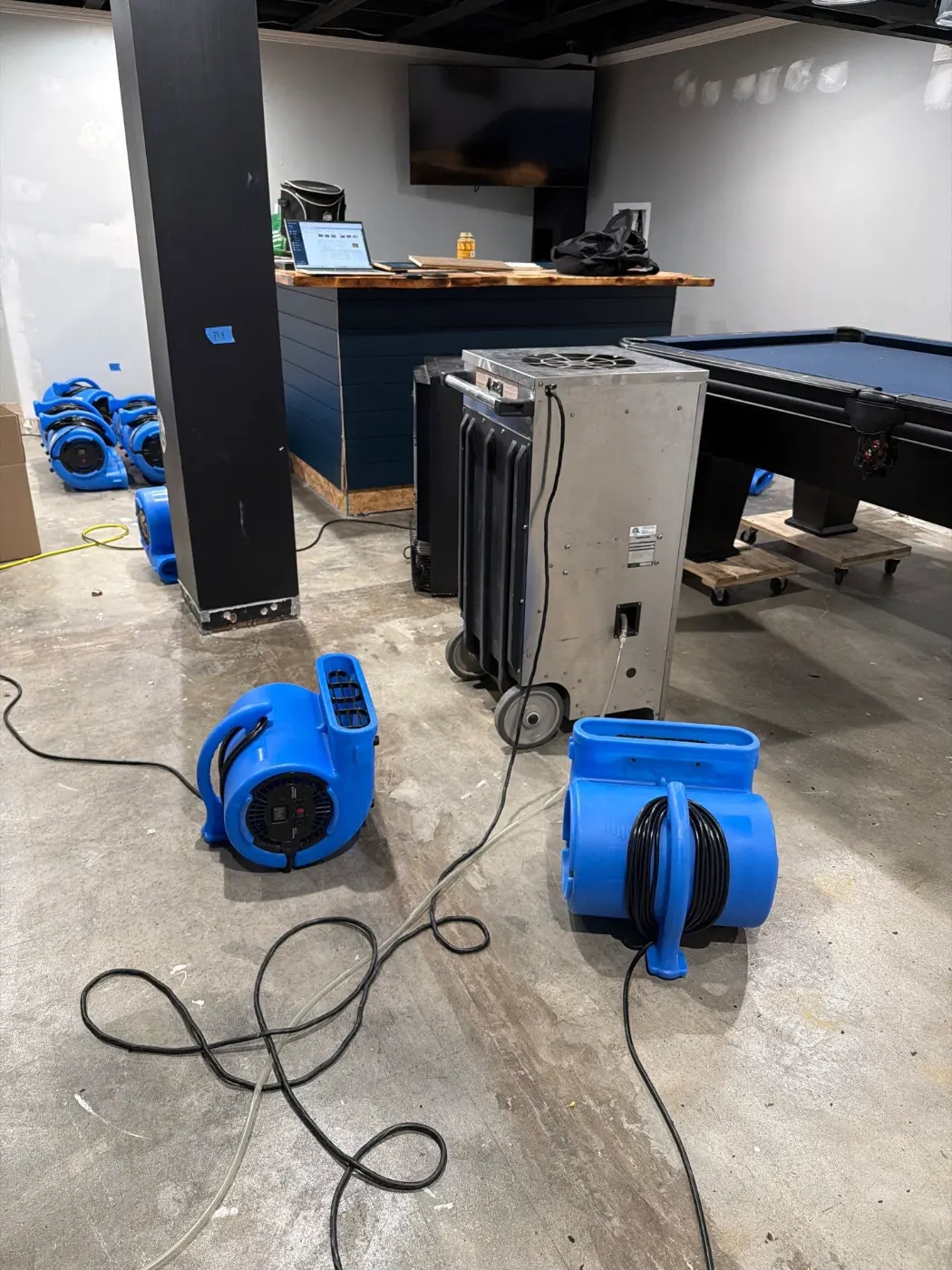
Dehumidification gets sized from affected cubic footage and material porosity, with dry air ducted into ceiling plenums, wall cavities and shafts. Air movers get placed to keep surface air moving, and the calculation gets revised as readings change.
Equipment Placement and Circuits
Air movers and dehumidifiers go where the drying calculation puts them, with ducting routed into plenums and shafts. The crew confirms what each circuit can carry and routes cords overhead or along walls to keep exits clear.
Daily Monitoring and Reporting
A technician reads the same locations every 24 hours, logs them against unaffected baseline readings taken elsewhere in the building, and repositions equipment as the wet zones shrink. The day's numbers go to your management office.
Commercial Water Restoration in Eagle Trace
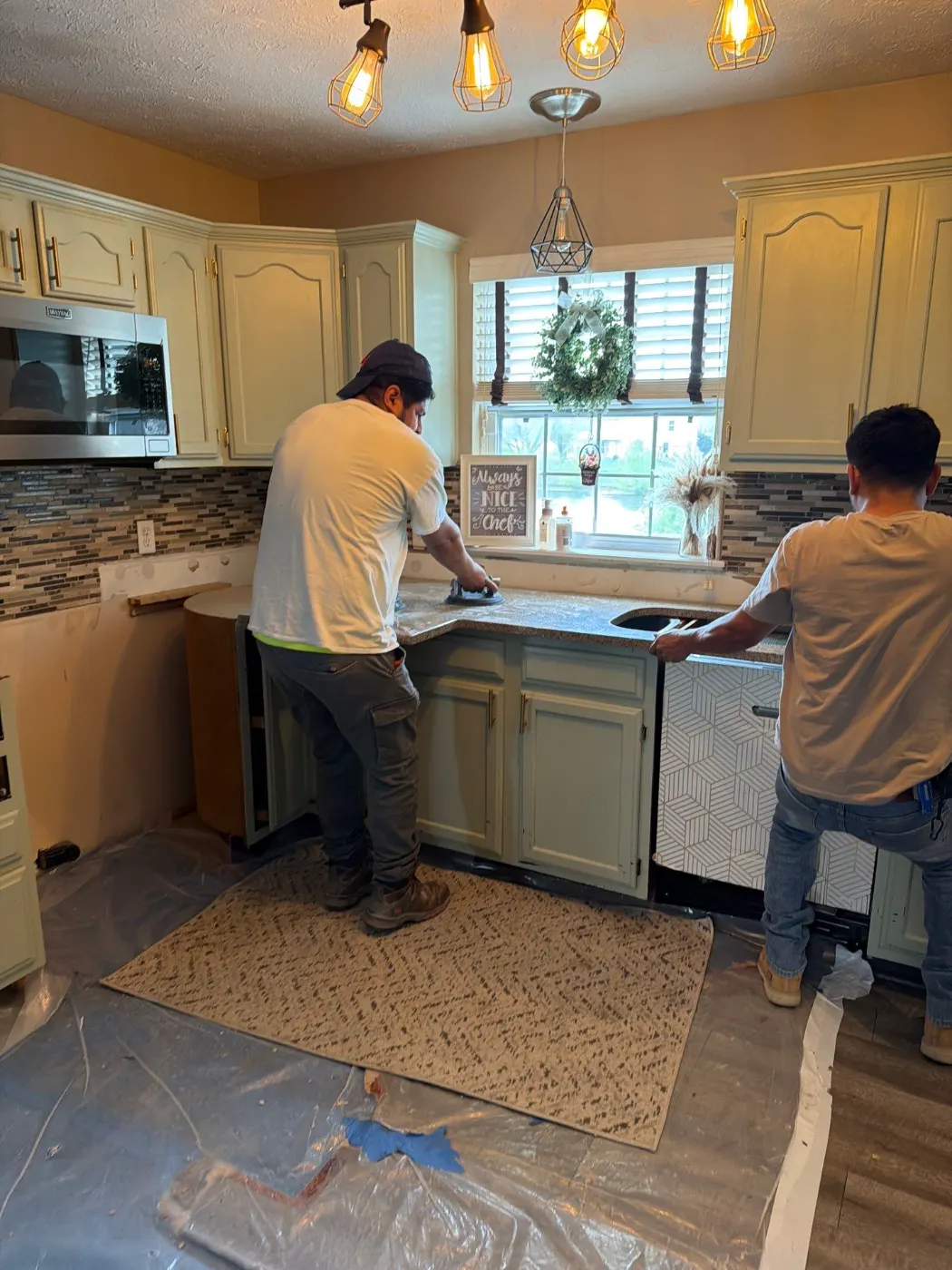
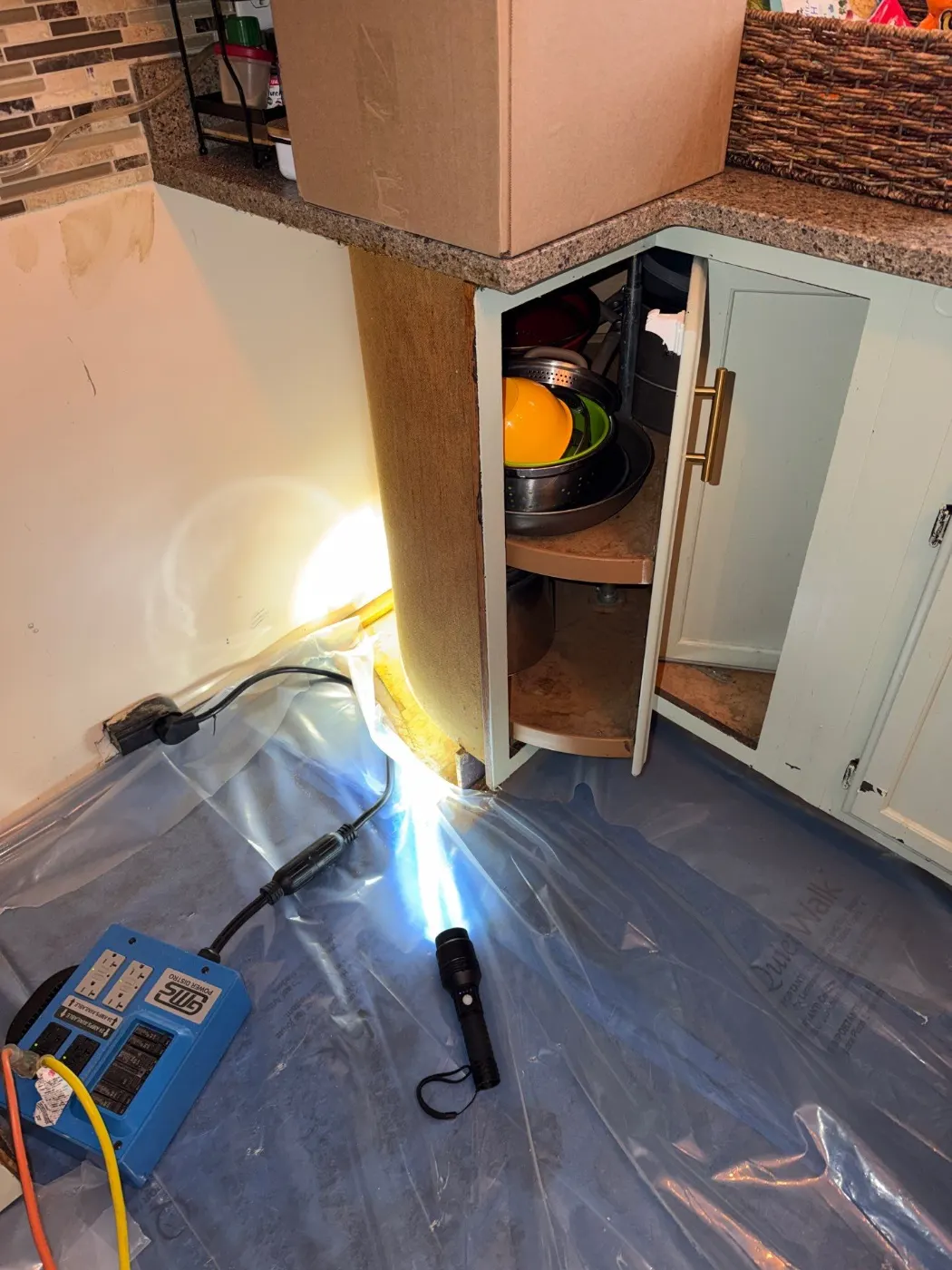
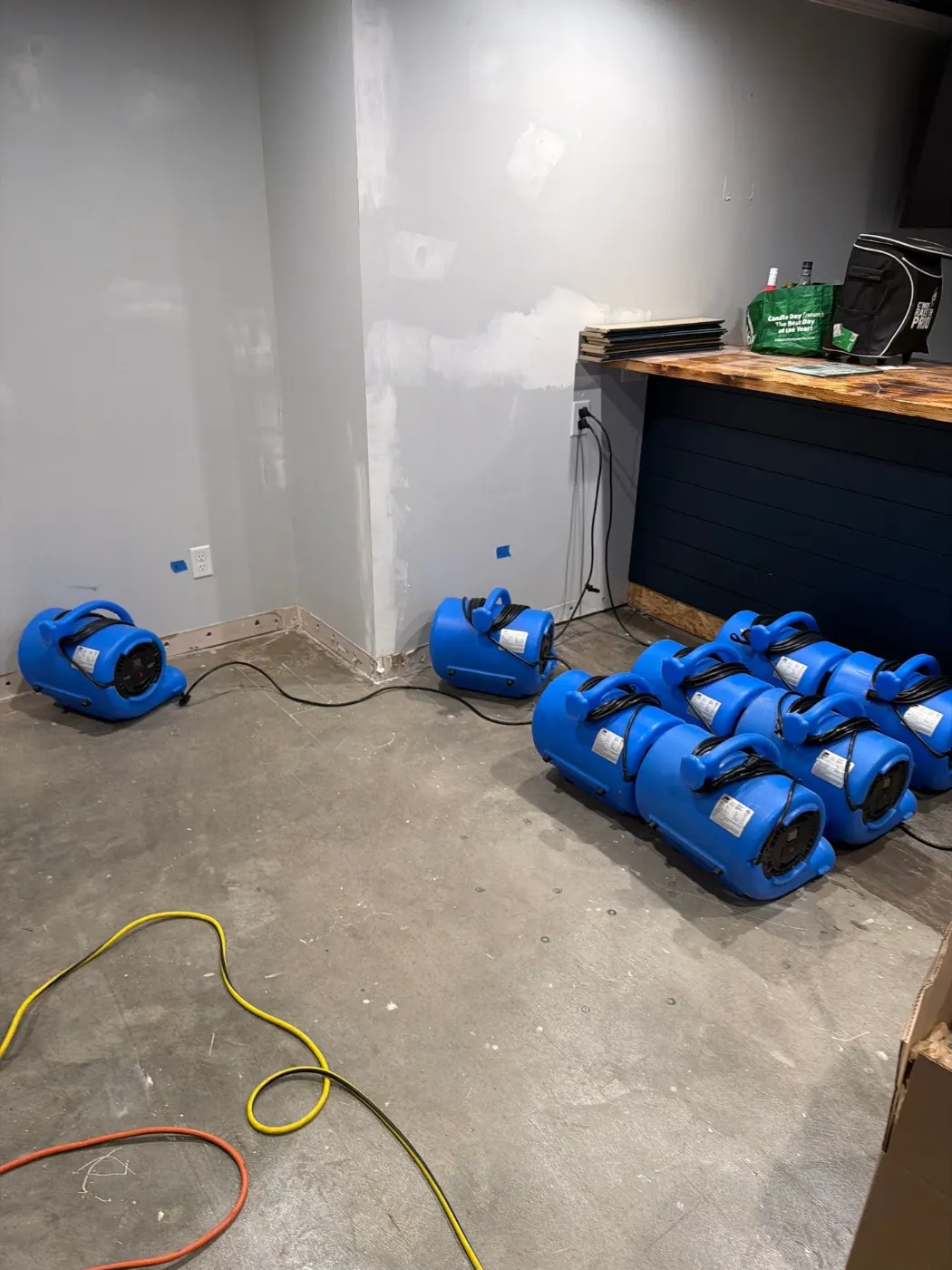
Photographs from real commercial water restoration jobs completed by our crew in Eagle Trace and surrounding areas.
Commercial Water Restoration FAQ
Questions Eagle Trace property managers ask us about commercial water restoration.
Guidance and Standards for Commercial Water Restoration
- The ANSI/IICRC S500 is the published standard for professional water damage restoration. The current edition is the Fifth Edition, 2021. IICRC S500 Standard
- EPA advises drying water damaged areas and items within 24 to 48 hours to prevent mold growth. EPA: A Brief Guide to Mold, Moisture and Your Home
Eagle Trace Neighborhoods We Serve
We take commercial water restoration calls in every part of Eagle Trace. Pick your neighborhood for local details.
Other Restoration Services in Eagle Trace
Eagle Trace Water Restoration handles the full scope of restoration work. Explore our other services below.
Water Damage Restoration in Eagle Trace
24/7 emergency response. IICRC certified water restoration from extraction to full dry out.
Learn more →Basement Flooding in Eagle Trace
Basement water emergencies handled fast. Extraction, drying, mold prevention.
Learn more →Sewage Cleanup in Eagle Trace
Category 3 biohazard cleanup. Full containment, decontamination, structural restoration.
Learn more →Request Commercial Water Restoration
Reach Us Directly
Our team is available 24/7 for emergencies and ready to schedule inspections during business hours.
Need Immediate Help?
For active water or mold emergencies, call us directly. We are available 24/7.