Commercial Storm Damage in Eagle Trace, IN
Two hour dispatch to Eagle Trace commercial properties. Emergency dry in, structural drying, and the documentation your carrier needs.
Eagle Trace Water Restoration delivers Commercial Storm Damage across Eagle Trace and surrounding areas with certified crews available 24/7 and every step documented for insurance. Call (463) 223-3831.
- Service: Commercial Storm Damage for Eagle Trace homeowners
- Service area: Eagle Trace, IN and surrounding areas
- Response time: Fast local response for Eagle Trace; live dispatch every hour of the year
- Licensed and insured (License #RC21100059)
- Serving Eagle Trace, IN since 2018
Commercial Storm Damage for Eagle Trace Businesses
A warehouse slab that took on a few inches of storm water looks dry by the next afternoon and isn't. Concrete holds moisture long after the surface sheds it, and whatever's stored on that slab absorbs what the concrete releases. Eagle Trace Water Restoration brings desiccant drying capacity to commercial losses in Eagle Trace, IN, measures the slab with the right instrument, and gives you readings you can show a tenant.
Photos get taken the same way on every visit, with a wide view of the room from a marked position and a close up of each reading with the meter in frame. Each image carries the room name and the date. When the file for your Eagle Trace building is reviewed months later, anyone can match a photo to its wall and its reading.
Property managers get a daily note from the Eagle Trace Water Restoration team with yesterday's readings, what moved, and what's planned. Photos come attached. If a reading goes the wrong way the note says so and says what's changing, because the person who has to brief ownership on a loss in Eagle Trace needs the actual numbers in hand before that conversation starts.
Your commercial property form decides how storm water through a damaged roof or wall assembly is covered, so read it with your broker. Seepage through an assembly already past its service life usually gets treated differently, and evidence decides which one your loss looks like. Eagle Trace Water Restoration documents the condition at the point of entry on your Eagle Trace building and leaves the coverage determination where it belongs, with your carrier.
Eagle Trace Water Restoration takes commercial storm intrusion calls in Eagle Trace and across Hendricks County around the clock. Bring the floor plan if you've got one and the crew will mark it up while they map moisture. The moisture map is yours to hand to ownership.
Signs You Need Commercial Storm Damage Restoration
If you notice any of these in your Eagle Trace building, schedule a free inspection before the issue worsens.
Cardboard cartons on the bottom pallet positions that have darkened and gone soft
Standing water in a rooftop unit's drain pan, or condensate running down the duct below it
Leak sensors or pit alarms going off in a mechanical room or IT closet during a storm
A supply diffuser dripping water or showing rust streaks after a storm
Metal door frames rusting at the base, with the gypsum board around them swelling
A musty, earthy smell at a return air plenum or coming out of a corridor diffuser
Floor boxes near the glass line with corrosion or standing water inside
Loose or lifted metal coping on a parapet wall, with fasteners backed out of the wood blocking
Water lines on the lower walls of a dock office or receiving area
Water standing in a elevator pit, or a pit pump that's been cycling longer than usual
How Eagle Trace Water Restoration Handles Commercial Storm Damage
We follow these steps in order on every Eagle Trace job.
Emergency Roof Dry in
The membrane breach or failed detail gets covered with a temporary dry in built to hold through the next rain. Photos go in the file before and after. The permanent repair stays on the work order until a roofing scope takes it over.
Contents and Inventory Protection
Stock and equipment on wet floors get lifted onto blocking or moved to dry ground, with plastic over anything that has to stay. A photo list records what moved and where, which supports each tenant's own claim.
Cavity Inspection Openings
Where meters or thermal imaging point to hidden water, the crew opens a small inspection hole or lifts a tile. What the probe finds inside decides how much larger the cut needs to be.
Slab and Dock Floor Checks
Concrete at a dock or in a warehouse holds water well after the surface dries, so the crew probes the slab at marked spots and keeps dehumidification and air movement running until the readings level off.
Midpoint Scope Review
Partway through the job, the crew compares the readings with the projected equipment period and tells the property manager if the schedule or the scope has moved. Added removal is photographed and explained before the work starts.
Commercial Storm Damage in Eagle Trace
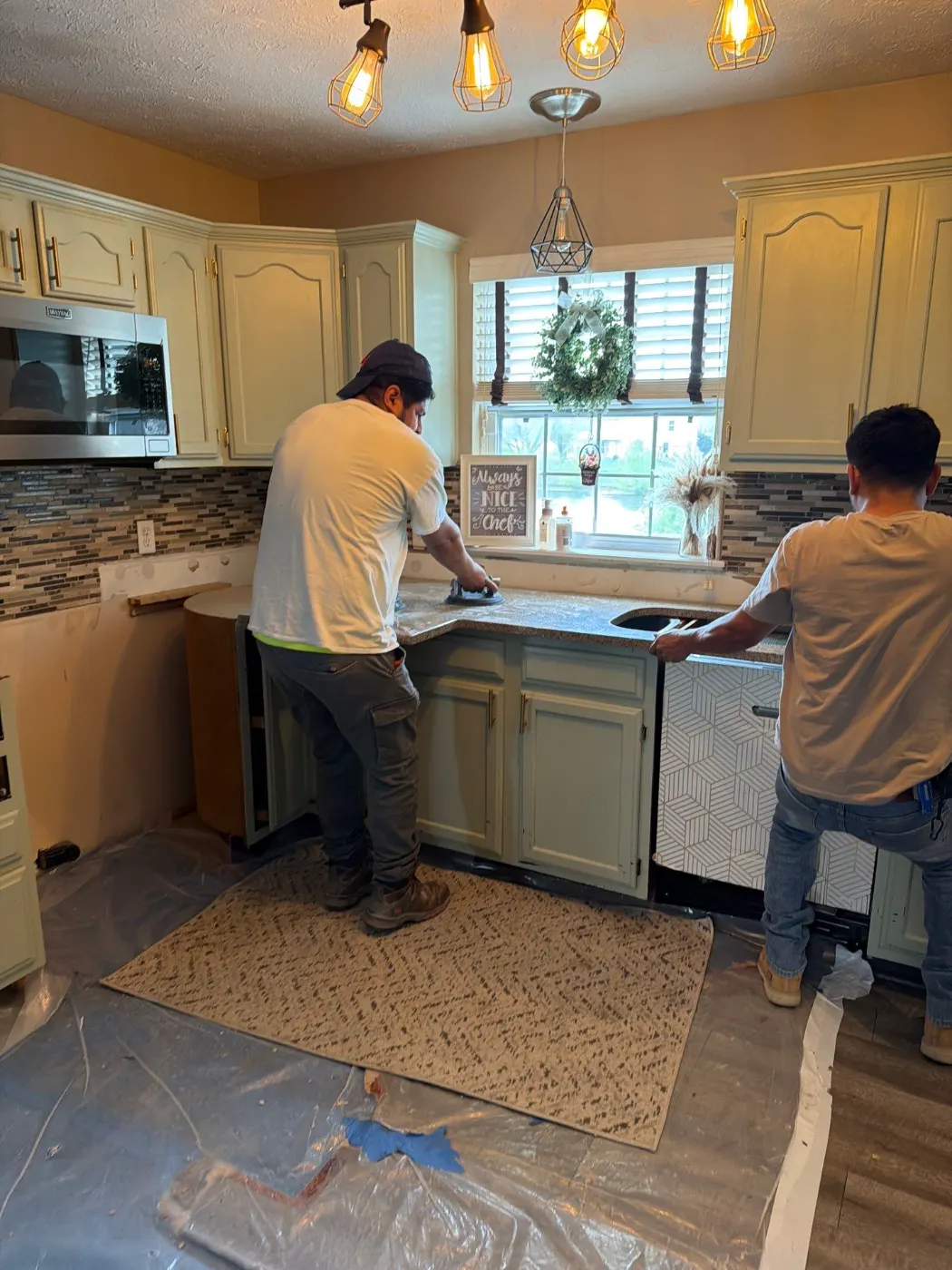
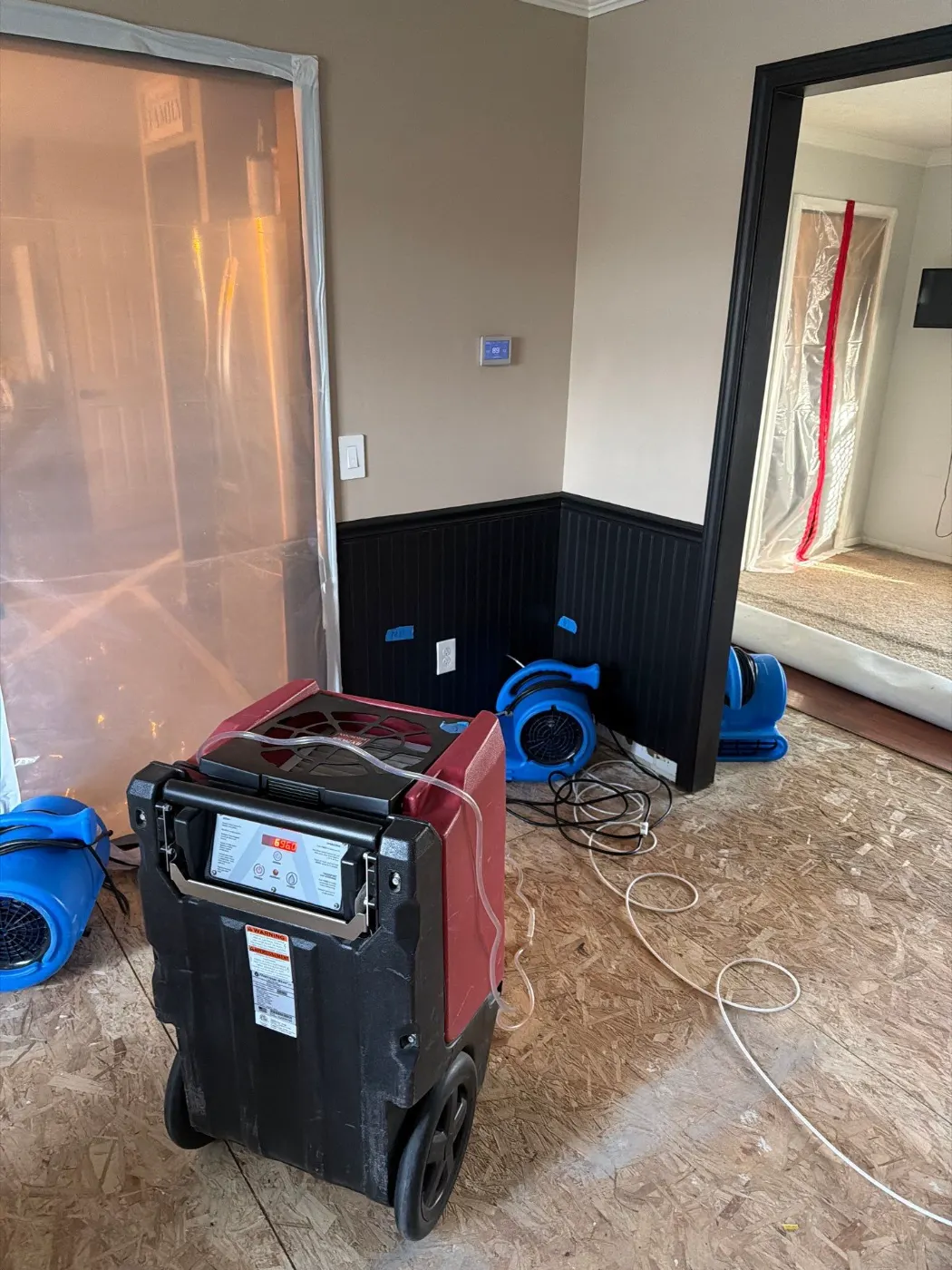
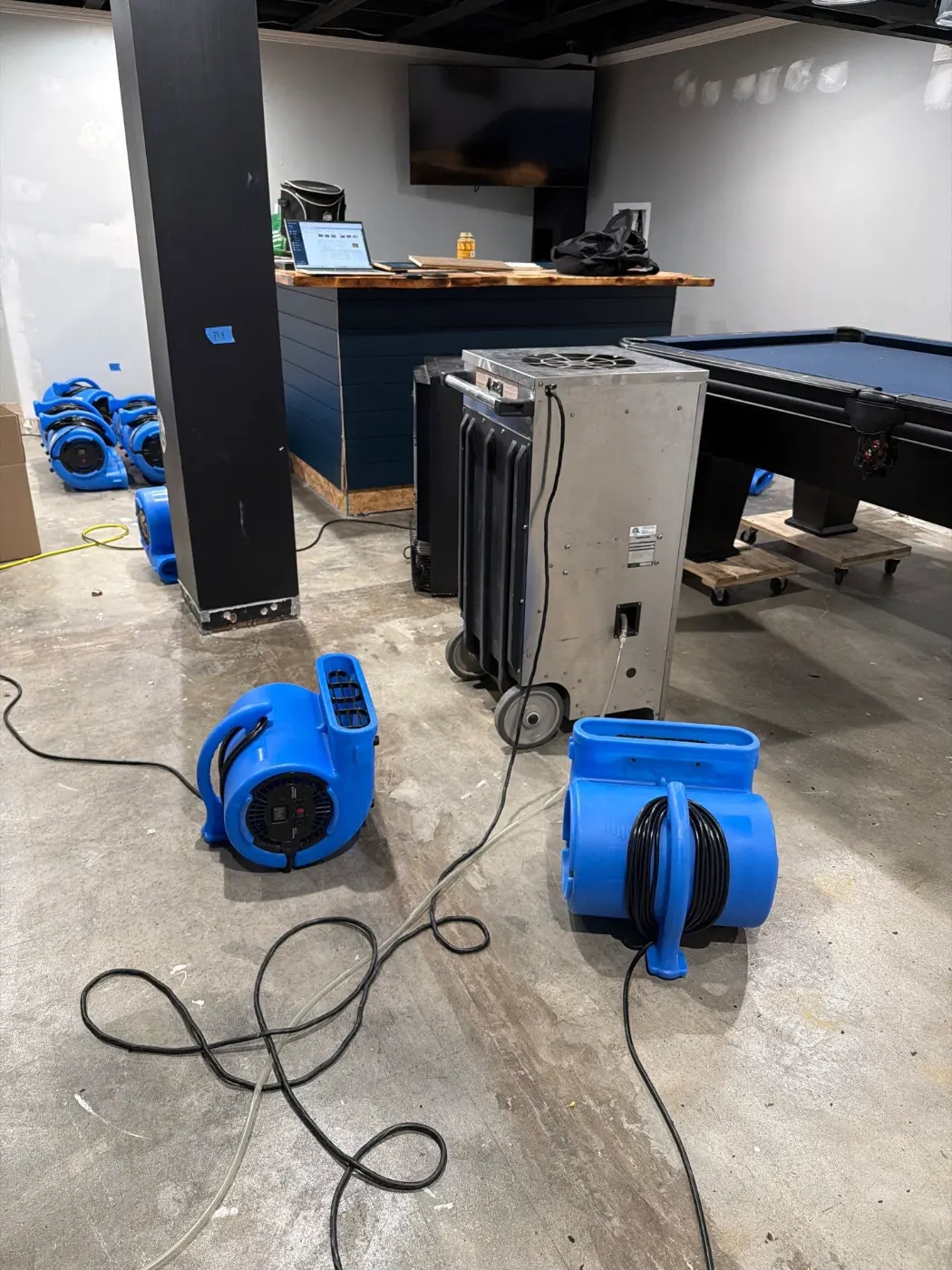
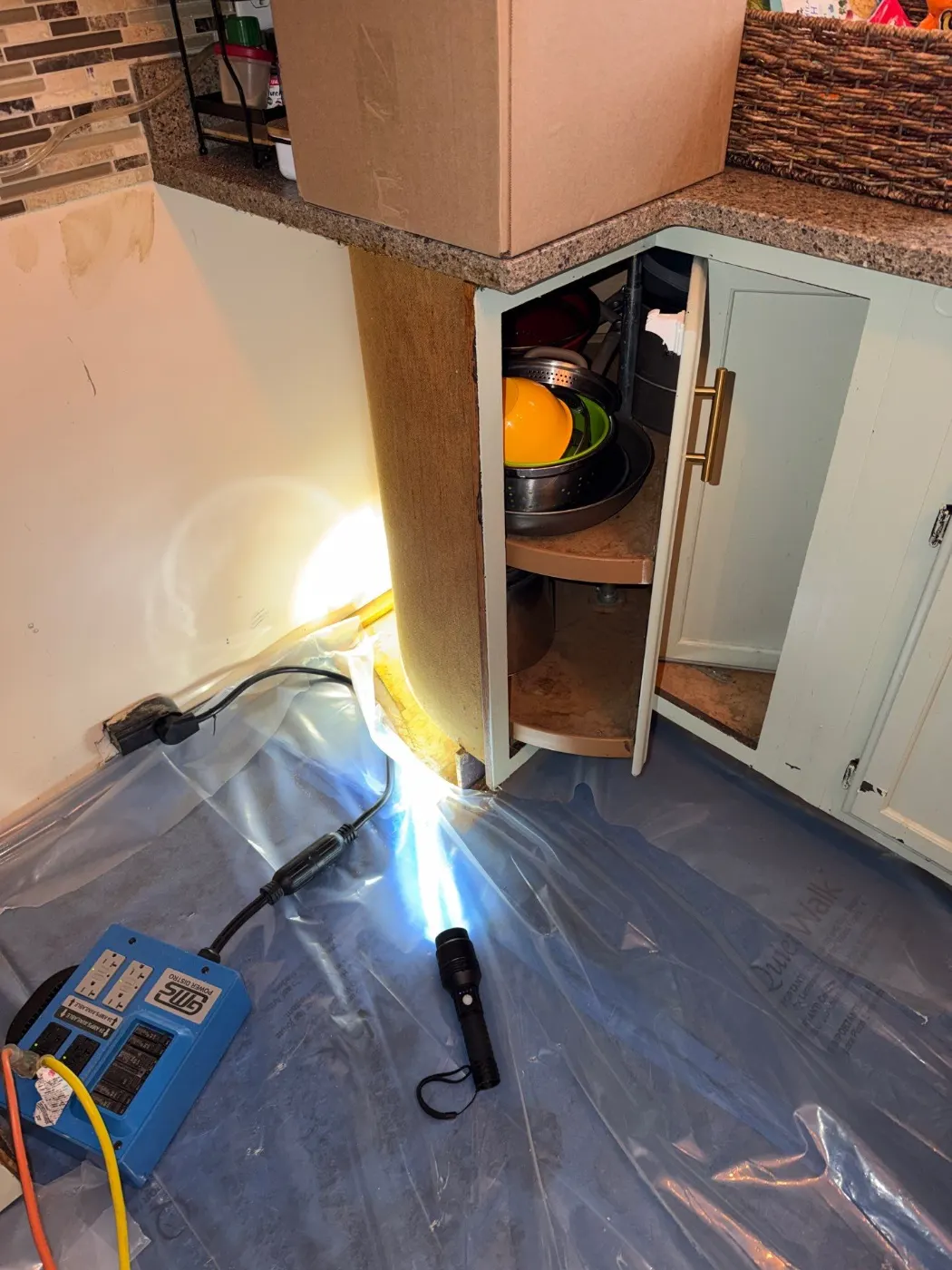
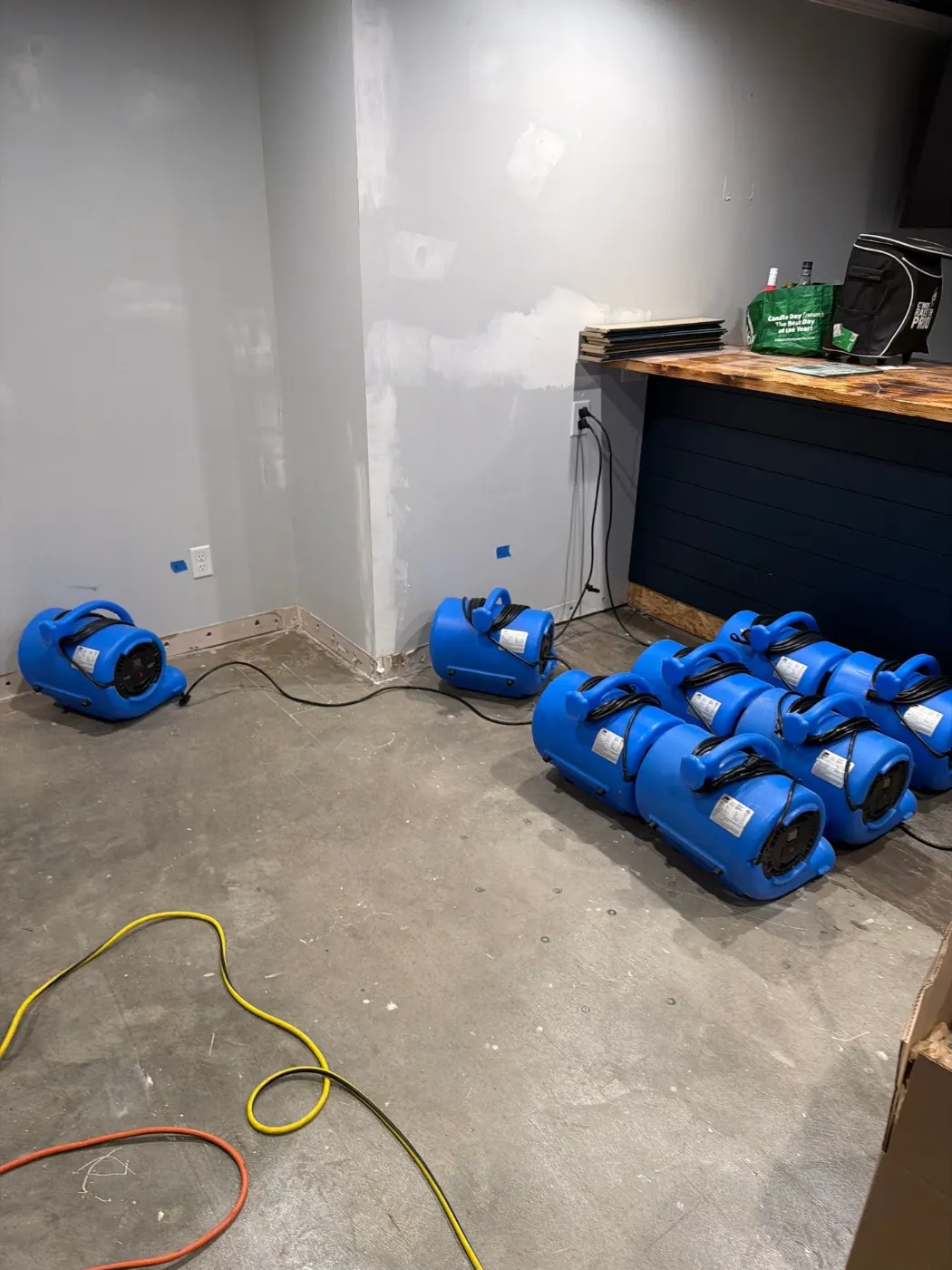
Photographs from real commercial storm damage jobs completed by our crew in Eagle Trace and surrounding areas.
Commercial Storm Damage FAQ
Questions Eagle Trace property managers ask us about commercial storm damage restoration.
Guidance and Standards for Commercial Storm Damage
- The National Weather Service office in Indianapolis posts summaries of recent central Indiana storm and flood events. NWS Indianapolis Event Summaries
- The ANSI/IICRC S500 is the published standard for professional water damage restoration. The current edition is the Fifth Edition, 2021. IICRC S500 Standard
Eagle Trace Neighborhoods We Serve
We take commercial storm damage calls in every part of Eagle Trace. Pick your neighborhood for local details.
Other Restoration Services in Eagle Trace
Eagle Trace Water Restoration handles the full scope of restoration work. Explore our other services below.
Water Damage Restoration in Eagle Trace
24/7 emergency response. IICRC certified water restoration from extraction to full dry out.
Learn more →Basement Flooding in Eagle Trace
Basement water emergencies handled fast. Extraction, drying, mold prevention.
Learn more →Sewage Cleanup in Eagle Trace
Category 3 biohazard cleanup. Full containment, decontamination, structural restoration.
Learn more →Request Commercial Storm Damage Restoration
Reach Us Directly
Our team is available 24/7 for emergencies and ready to schedule inspections during business hours.
Need Immediate Help?
For active water or mold emergencies, call us directly. We are available 24/7.